
AI document processing software often categorized under the term “industry” Intelligent Document Processing (IDP) is a type of technology for enterprises that is that is designed to facilitate the processing classification as well as validation of information in semi structured and unstructured documents.
The past of document processing was heavily reliant on the structure of documents such as coordinates coordinates and conventional layouts to extract data from paper sheets or electronic documents. If the format of an invoice changed by a centimeter or if an item was changed by a vendor’s orientation the traditional system failed immediately putting the file in manual queues for exceptions.
The latest AI document processing software eliminates those fragile dependences by integrating computer vision machine learning and natural language processing in an integrated operational framework.
Instead of scanning a particular pixels coordinate to determine a complete quantity the artificial intelligence analyzes the content in context and identifies pertinent data much the way the human coordinate could. It process a vast variety of enterprise assets that are coming in that include:
- Corporate receipts purchase orders and corporate receipts.
- Legal contracts with multiple pages and master service contracts
- Forms of compliance that are handwritten and signed as well as shipping manifests
- Financial audits with multiple columns and thick tax files
- Charts complex graphical layouts as well as embedded designs
Through the transformation of text heavy messy formats into clear organized information structures such as Markdown or JSON This software helps bridge the gap between raw unstructured data and the core systems for transactional processing such as ERP platforms as well as database ecosystems.
The Shift: From Legacy OCR to Agentic Document Processing
The world of document automation is currently undergoing an extreme transition point. Market trends are rapidly shifting away from passive extracting text to autonomous execution driven intelligent which is often called Agentic IDP.
Semantic Comprehension Over Rigid Templates
The traditional Optical Character Recognition systems are completely ignorant of the language’s semantics. They transform pixels into static text strings however they do not understand what these words actually mean in the context of a workflow in business. In the example above for instance if an older system is able to extract”Total Due” as a string for example “Total Due: $5000” is treated as a single sequence of letters.
The latest version of AI document processing software relies on foundational models that are advanced and the Large Multimodal Models (LMMs) that interpret documents as semantic landscapes. The software scans the complete document recognizes the complexity of context specific syntax and the structure of hierarchies.
When a document mentions an early payment discount within an unintentional footer section The software analyzes the financial implications of the clause instead of just logging the text and altering the extraction objectives based on an overarching logic of semantics.
Multimodal Capabilities and Navigating Unstructured Chaos
Document collections of enterprise documents are completely chaotic. The data suggests that up or more of the newly created documents in the corporate world are unorganized and buried in long form email threads apex of multi page vendor contracts as well as intricate physical scans that contain changes made by hand.
Modern AI software employs multimodal architectures that can analyze visually based configurations and text strings at the same time. They recognize spatial orientation recognize the relationshipal significance of information contained
within nested tables create cross references between diagrams and text blocks and can decode handwriting with low resolution or skewed fax pages with amazing precision. Visual textual convergence helps prevent the system from going down when faced with irregular changes in structure.
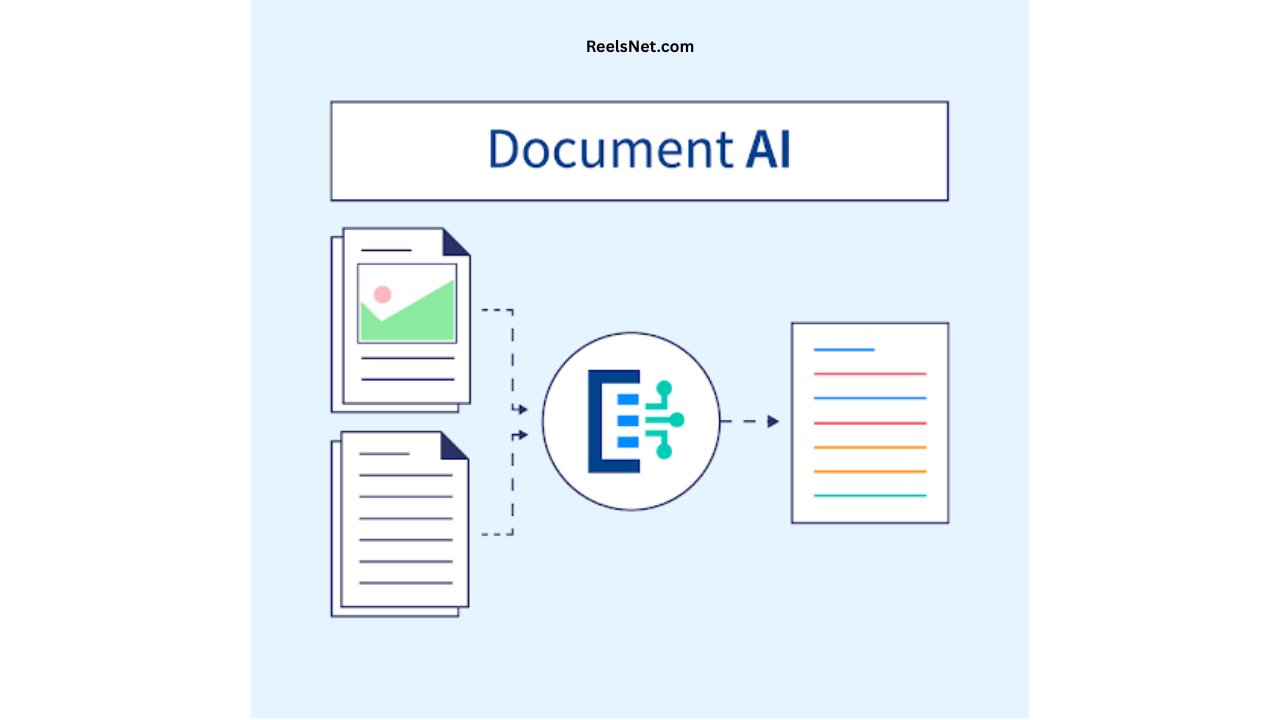
Core Structural Pipeline of Modern IDP Platforms
To understand fully how automated systems deal with huge volumes of operational data It is essential to track a file’s path through an advanced processing system. This framework is based upon a multi stage system created to purify the data determine semantic significance to determine accuracy then perform tasks on the basis of obtained insights.
1. Document Ingestion and Pre processing
The operation begins with the receipt of documents via various channels of enterprise ingestion including attachments to emails cloud storage hot folders for cloud storage API endpoints API hot folders or direct inputs to scanners. When the document is received the prep phase starts into high gear.
Advanced vision algorithms perform contrast enhancements binarization adjustments for skew as well as digital noise elimination. The result is that compressed images or poor physical scans are improved and cleaned to allow for extensive character analysis.
2. Cognitive Classification and Contextual Intent
Before any data is extracted the program has to determine what exactly it’s looking for. Instead of relying on strict name conventions for files or file names the AI examines the file in order to discover its fundamental purpose intention as well as its structural form.
In analyzing certain vocabulary patterns as well as spatial characteristics the AI distinguishes from an unintentional invoice an agreement to not disclose or an HR onboarding package. The categorization of the document ensures that it can be placed on the proper path of analysis.
3. Machine Learning Extraction and Semantic Mapping
After the type of document has been verified the extraction process starts. The software analyzes the layout of the image along with the semantics of embedded languages in order to identify important metadata elements such as table items as well as key value relations. Instead of looking for texts at a specific location it is the AI concentrates on the fundamental idea by converting paragraphs that are not structured or cell blocks of dense size into clean structured information.
4. Explainable Verification and Human in the Loop Realignment
Once extracted the information is subjected to a thorough validation verification and enrichment tests. The AI gives confidence scores to every field that is extracted and then evaluates the data against business guidelines or other external databases. If the value is below the security threshold set by law or has a calculation that is not in accordance with and the report is identified to be reviewed. Human coordinators interact with an auditory layer that’s intuitive to check the accuracy of outputs with low confidence and the platform is constantly updating its internal parameters in response to the real time corrections made by manual.
5. Autonomous Execution and End System Delivery
After validation the information is transformed into a useful assets for business. The program converts the data into structured data or triggers automatized sequences that are shared across environments of software. Instead of just exporting flat file formats agentic structures make use of this intelligent structure to execute databases compare data against procurement logs from outside as well as execute the end to end operations workflows in a completely autonomous manner.
Emerging Trends Dominating the Market
The present landscape of document intelligence is characterized by fast moving innovation cycles that emphasize decentralization accessibility to natural languages as well as the rigidity of confidence metrics.
The Rise of the Citizen Automator
In the past changing or creating the workflow for document extraction required IT intervention complicated script changes as well as extensive regular expression tests. The most current version of AI document processing software is opening up this space to the public by using natural languages interfaces.
Human resource managers from the departments of human resources legal as well as accounting teams may create extraction policy by using simple language instructions. Instead of defining intricate algorithmic coordinates user could instruct the software to search for the main invoice figure.
If an earlier settlement deduction has been included in the document then pull the net figure that has been adjusted instead. The platform interprets the instruction and immediately maps out the logic behind it and placing development tools in the hands of personnel who are not technical.
Trust Through Explainability
In the process of gaining document processing tools the ability to operate autonomously businesses are avoiding “black box” systems that create outputs that have no visible logic. It is the current focus to provide full explanationability.
Modern IDP interfaces show precise confidence levels and thorough explanations of the reasoning behind their decisions. As an example operating interfaces could say that a certain information field was extracted with 94% accuracy since it directly corresponds to the billing row on page four and also correlates with the reference number that is that is found in the introduction in the first page. Its granular transparency makes it easier to verify processes which allows auditors to swiftly determine what the AI reached its conclusion.
Compliance Realities and Security Authorization Gates
The requirements for the operation of automated document systems have been made more difficult due to the strictness of global regulations.
The compliance requirements like the gradual enforcement in The European Union AI Act make it mandatory for organizations to require complete architectural transparency as well as verified trace information as well as rigorous assessment of the risks associated with any device handling sensitive or personal data.
In parallel security clearances that are strict have been a standard necessity for government sector financial and healthcare software acquisitions. Software platforms that have cleared the highest security standards such as those
that have achieved FedRAMP High authorization are becoming more sought after. They have comprehensive security settings that permit governments and highly regulated companies to securely process sensitive tasks without risking private or confidential files to the cloud’s public risk.

Top AI Document Processing Platforms Evaluated
Selecting the right software platform will require a deep knowledge of the market’s specializations such as footprints for infrastructure development tools.
Enterprise Scale and Integration Infrastructure
Large companies with extensive old environments demand a large amount of scaling and robust integration of systems as well as multi layered automation solutions.
- UiPath Document Understanding It integrates with the broader Robotic Process Automation infrastructures. It’s highly efficient in organizations who need to incorporate extract fields for documents directly into software queues already in place as well as cross application workflows and enormous back office automation processes.
- ABBYY Vantage built with a long standing time of tradition based OCR creation this system has a new microservices structure that is powered by an extensive online market place that offers already trained document models. It is compatible with more than 200 languages which makes it an ideal choice for international shipping logistics and supply chain management across borders.
- Hyperscience was designed to handle high volume corporate environments which prioritizes high quality accuracy and speed of processing. This software excels at handling extremely distorted files faxes that are low resolution and complicated handwritten forms. The platform focuses on achieving as high as 99.5 precision which allows the highest rates of touch free automatized processing for financial services companies as well as public institutions.
Native Cloud AI and Next Generation Parsing
Cloud native organizations developing sophisticated AI applications that are generative AI applications frequently rely on an array of cloud APIs including developers first layout parsers.
- LlamaParse An API designed for developers designed specifically to improve the layout of documents for Large Language Model and Retrieval Augmented Generation workflows. It is a master at dissolving complicated documents tables with nested rows and embedded images into a clean markdown format guaranteeing that self contained AI agents are provided with highly precise data which is contextually sensitive.
- Google Document AI: Part of the larger cloud infrastructure the suite includes specially trained trained processors that are that are specifically designed for major industries such as mortgage lending and acquisition. The software leverages sophisticated base models that handle complicated layout parsing and also provides seamless integration to enterprise search as well as analytics workflows.
Business Value and Performance Enhancements
Implementing an AI driven method of document processing can result in instant evident improvements across operational efficiency financial performance operational velocity as well as accuracy of data.
Moving from manual review to old coordinate based systems to intelligent automatization transforms the standard process of document management from an administrative cost centre into an informational strategic benefit.
The effect of this change can be seen clearly in crucial performance indicators.
- Automation of the process for completing and validating data reduces processing costs from an average between $3.50 up to $6.00 per file down to a more streamlined interval that ranges from $0.90 up to $2.20 for each file. This results in an average of 45 to 75 percent reduction in total costs for processing.
- Work Efficiency Optimization Manual processing costs for the year could be efficiently allocated shift total overhead costs for full time equivalents from $38000 to $55000 per year to a footprint for infrastructure management between $12000 and $22000. This can result in 55% 70% reduction in direct labor costs.
- Error Rate Reduction The elimination of manually entering data cuts defects in document processing from normal human errors of 3.5 percentage up to 8.5% to the controlled operating margin that ranges from 0.5 percent or 1.2%. This eliminates the possibility of 90% the processing errors.
- Increased Throughput: Each team’s capacity increases exponentially as standard performance metrics changing from manual levels between 55 and 85 documents each day to an automated number of between 250 and 600 files for each director.
- Turnaround Time Compression: All inclusive end to end processing timeframes decrease dramatically from the standard 24 hour to 48 hour timeframes to speeds of execution that range from 1 to 6 hours increasing general fulfillment cycles up to 90 percentage.
Selecting the Ideal Platform for Your Architecture
Selecting the best platform for your business requires an objective assessment framework that is specific to your business’s particular requirements for operations documents as well as your existing IT stack.
- Document Structure Mix Go over the distribution of your files inbound. If your workflow is comprised primarily of structured standard forms cloud APIs that are traditional offer a quick value to time. If however your organization is dealing with unstructured variants of multi page agreements or even handwritten entries consider systems that have strong multimodal capabilities as well as an in depth understanding of semantics.
- Volume Predictability Scalability Examine your company’s document processing patterns. If your company processes high fluctuating or seasonal volumes the consumption based cloud APIs provide the highest cost flexibility. If you are looking for a massive and steady state enterprise tasks search for cloud platforms that can support containerized or on premise deployments that can maintain cost effective operations.
- Ecosystem compatibility: Examine the layout of your current enterprise technology. If your operations operate predominantly using a large automated robotics framework or an specific cloud environment choosing an application for processing documents that is specifically designed for that platform will reduce the time to deploy and decrease total integration cost.
- Compliance and risk exposure Find out what your company’s compliance and privacy requirements. Companies that process sensitive data in international locations must make sure their selected IDP provider is able to provide exact regional records offers transparent processing trail trails and is certified as a compliance expert which are in accordance with stringent data security requirements.
Conclusion
AI document processing software has been in a mature well regulated phase of market acceptance. It’s a leap forward from the limitations of traditional text extraction using templates into a time of agentic document intelligence.
With advanced semantic comprehension and multimodal visual parsing as well as a human in the loop validated system that can be explained to new platforms can transform complicated information into valuable data assets.
Organizations looking to maximize back office efficiency decrease the risk of manual compliance as well as empower teams that are not technically skilled by deploying an advanced automated document system is not just an experimental idea it is now the essential element for achieving enterprise digital scaling.